Our nerves are critical to our ability to move in the ways we need and want, but sometimes we experience problems and concerning symptoms like numbness, tingling, burning, balance issues, and more.
These symptoms can indicate many things, from not particularly worrisome to very concerning, such as a diagnosis of neuropathy or muscular dystrophy.
At Houston Neurological Institute, our accomplished and caring provider team thoroughly evaluates you if you’re experiencing painful symptoms that point to a nerve condition.
One of the diagnostic tools they rely on is the EMG, or electromyography test, which is an electrodiagnostic test that provides them with important information about a condition you may have.
What does an EMG tell my neurologist?
An EMG reveals important diagnostic information to your neurologist, and can indicate that you’re living with one of these conditions:
- Neuropathy, including diabetic neuropathy (peripheral nerve damage)
- Disc herniation
- Myopathy, which causes muscle weakness and affects your ability to perform daily tasks
- Nerve compression conditions, such as carpal tunnel syndrome
- Pinched nerves
- Sciatica (pain in the body’s longest nerve, running from the lower back and down the legs)
- Cervical (neck) radiculopathy (nerve root compression)
- Muscular dystrophy
- Amyotrophic lateral sclerosis (ALS)
Neurologists often use an EMG in conjunction with other tests to diagnose a condition, including imaging tests, muscle biopsies, and blood tests.
This important exam not only helps lead your provider to an accurate diagnosis, but it allows them to rule out certain conditions as well.
What is the EMG experience like?
Although we’re rarely conscious of it, our nervous system (the brain and spinal cord) controls movements as slight as lifting your pinky to as major as toting a heavy box. You move because your motor nerves (those in control of movement) direct electrical signals to your muscles.
If you have disturbing symptoms like those we described above, your doctor will probably recommend an EMG, which involves inserting a small needle with an electrode attached to it into your muscle to record its electrical activity. They may do this in various locations, depending on which muscles they’re evaluating.
If you’re still, no electrical activity will register, but contracting your muscle produces electrical activity — a small amount if you don’t contract your muscle much and a significant amount if you engage in deeper contraction.
When you get an EMG, it comprises a nerve conduction study (NCS) and a needle electrode examination (NEE), which we referred to above.
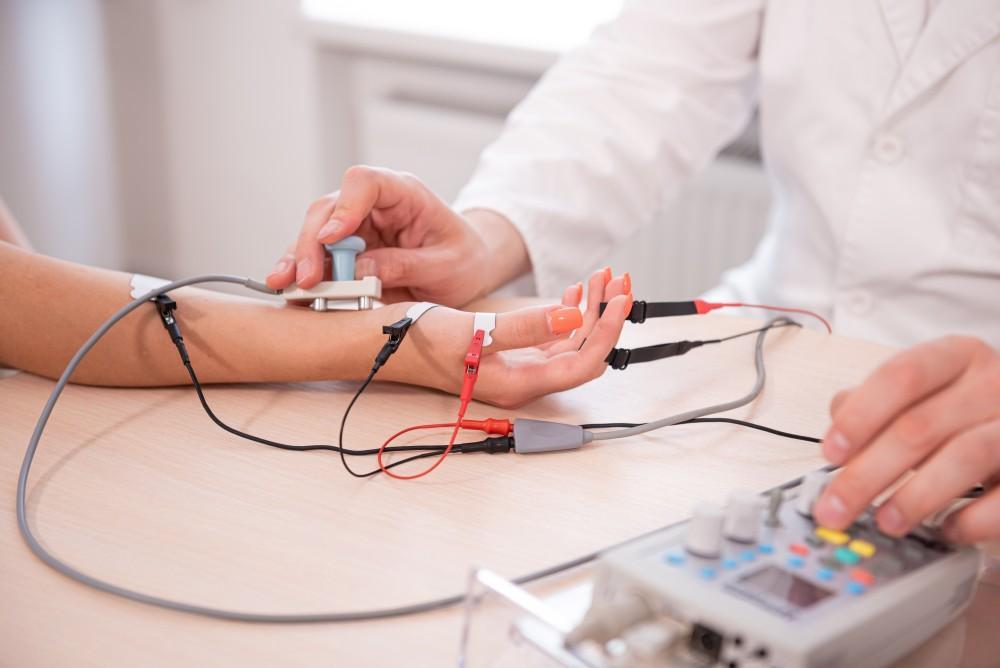
For the NCS, you have electrodes put on your skin that assess nerve function, followed by gentle nerve stimulation so your provider can determine the level of electrical signals your nerve can carry.
During the NEE phase of the test, your provider inserts the small needle into a predetermined muscle to record the muscle activity (with no stimulation to the muscle).
All you need to do prior to the test is bathe and not use skin cream or lotion afterward, and we make certain that you’re comfortable throughout the procedure. Be sure also to wear comfortable, loose-fitting clothing to your appointment, and your doctor might talk to you about stopping taking blood-thinning medication if you’re prescribed one.
An EMG takes anywhere from an hour to an hour-and-a-half to perform.
At Houston Neurological Institute, we’re committed to easing or if possible, eliminating your painful symptoms, and our sophisticated arsenal of tests (which includes EMG exams) helps our astute providers arrive at a correct diagnosis more quickly, so you can begin getting treated and feeling better as soon as possible.
Contact our Pearland or Pasadena office to schedule an appointment with us if you’re having troubling symptoms, or use our convenient online booking tool.